
6 reasons the twoplus Applicator supports your fertility journey
Conception is a numbers game, and the course is tougher than most couples realise. Here's what actually happens to sperm on the way to the cervix, and how the twoplus Applicator's Soft Tip helps keep more of them close to it.
- Most sperm never get close to the cervix.
- The twoplus Applicator's Soft Tip keeps more of them close to it, and loses less to leakage.
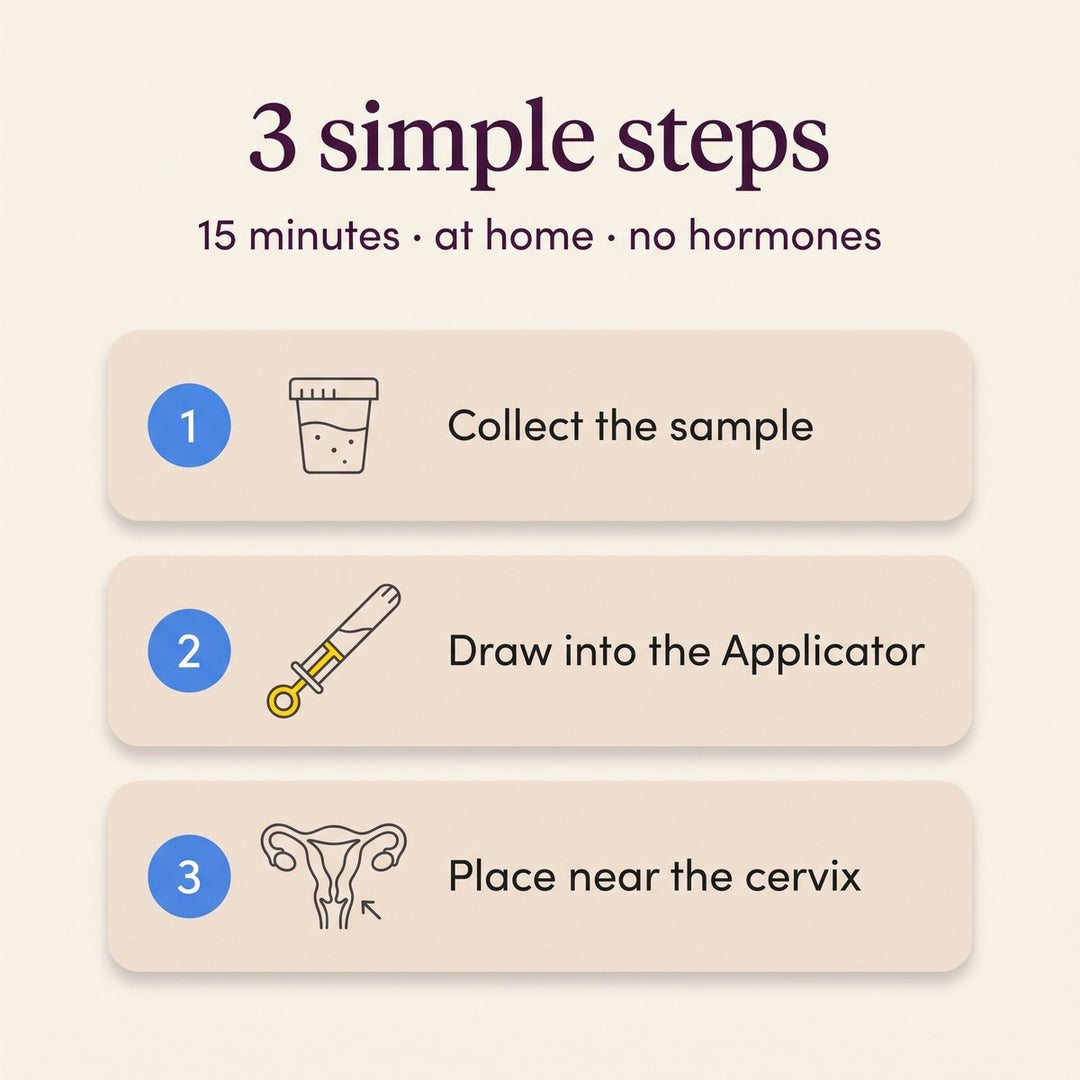
- At home, about 15 minutes, no hormones. A lower-cost step to try before IVF or IUI.

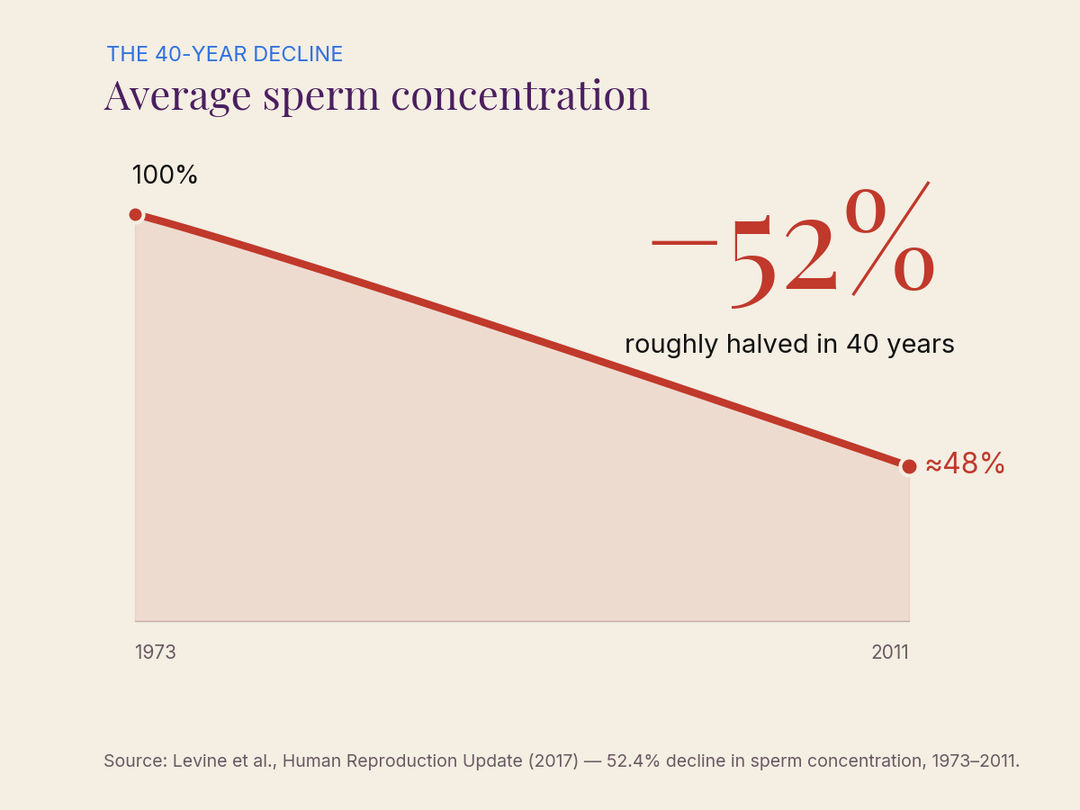
Sperm counts have roughly halved in 40 years
Across studies, average sperm concentration in many regions has fallen by more than 50% since the 1970s, so fewer sperm set out, and fewer survive each stage that follows. The more healthy sperm you can keep close to the cervix, the more stay in the running.[1]
It skips the most hostile stretch of the journey
Instead of leaving sperm at the vaginal opening, the Applicator places them close to the cervix, so they spend less time in the acidic vaginal tract that can weaken them before they reach the gateway.[2]

The Sperm Cradle holds sperm right where it counts
The Soft Tip acts as a gentle stopper. Rather than letting semen disperse and drain away, the Sperm Cradle concentrates and holds it at the cervical opening, so more sperm stays close to the cervix, in contact with the cervical mucus.

It loses less to leakage
A large share of semen simply flows back out during and after intercourse. By cradling it near the cervix, the Applicator reduces that leakage, keeping more of what matters close to the gateway, for longer.[3]

It works with your body's natural filter, not around it
We deliberately stopped at the cervix. The Applicator delivers sperm close to the cervix and then gets out of the way. Your cervical mucus still filters sperm naturally, letting the healthy, motile ones through, exactly as it would otherwise.[4] The Applicator's job is the start line. The rest is nature.

It takes more than one sperm
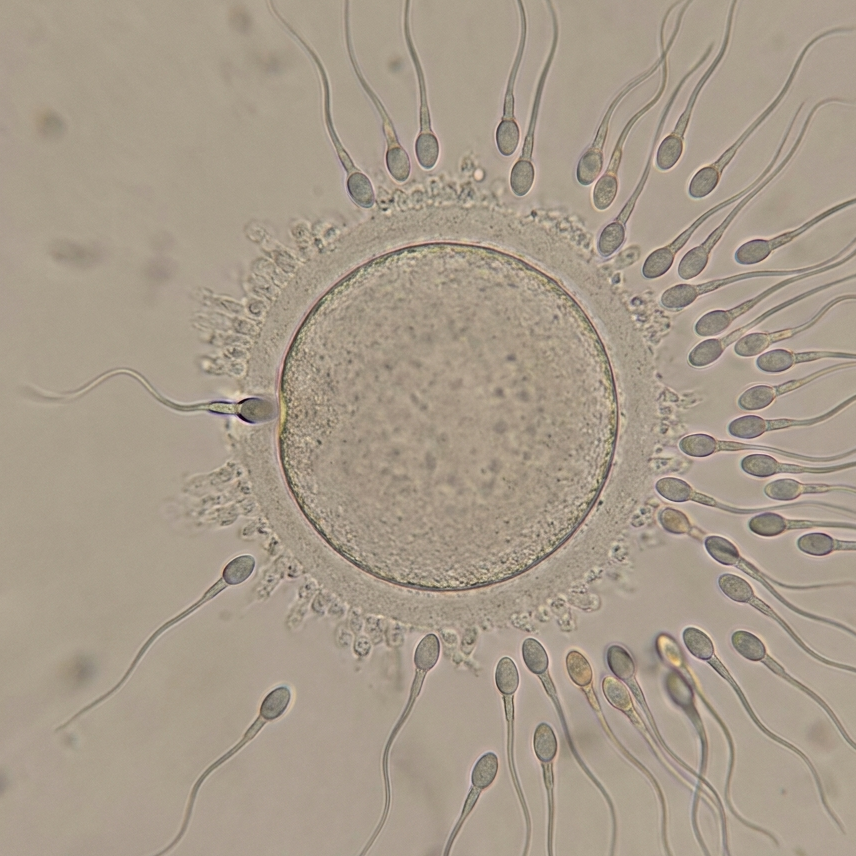
Only one sperm fertilises the egg, but it can't get there alone. Sperm work as a pack to break through the egg's outer layer, so the more healthy sperm that arrive, the better the odds for the one that counts.[5]
An honest note: it isn't right for everyone. If you don't ovulate, have blocked tubes, or your partner has no sperm, see a fertility specialist. The Applicator is a step to try before or alongside IVF or IUI, not a replacement for them or for medical advice.
Give more sperm a head start
The twoplus Applicator places sperm close to the cervix, cradles them there with the Soft Tip, loses less to leakage, and then lets your body do the choosing, built around the biology of conception.
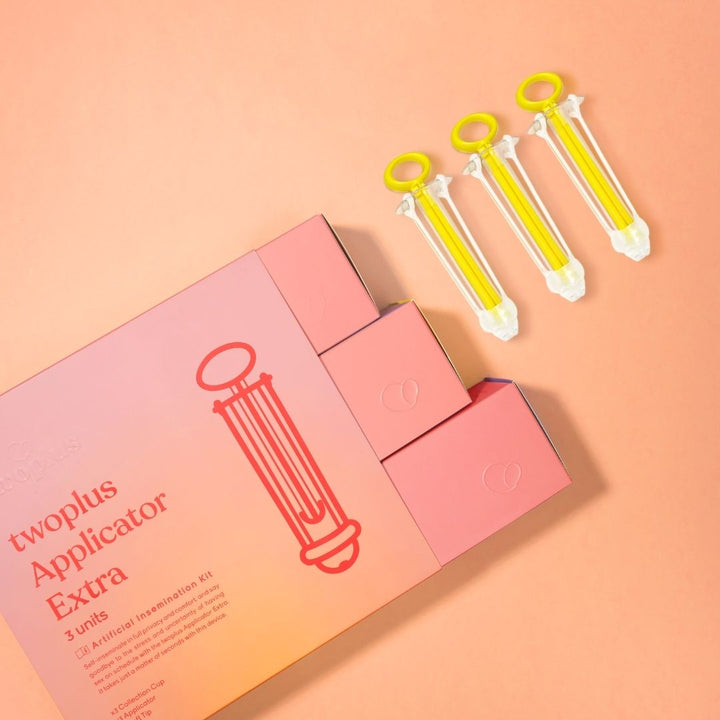
- ✔ Single-use · about 15 minutes · no doctor needed
- ✔ Discreet delivery
- ✔ CE/UKCA certified · FDA-cleared
Real experiences, in their words
Genuine stories from couples across the UK who tried the Applicator.
Doctors said I only have a 9% chance of conceiving naturally
We went through 2 rounds of IVF, one with ICI, but they didn't work. Our savings were depleted and I was looking for an affordable alternative. I believed that my body knew what to do, and it just needed some help. That's where twoplus came in!
We used the Applicator three times in one ovulation cycle and got pregnant! If I could restart my TTC journey, I would have tried twoplus first before spending thousands on IVF. It would have saved me a lot of stress, recovery time, and money. Sometimes, your body just needs a helping hand.
Anna, 41 & Cooper
Sheffield
NHS Fertility Clinics refused to help us because my BMI was over 30
We struggled for three years and have been following up with a fertility clinic. As my BMI is higher than 30, but they didn't want to support us with IVF. I didn't have any diagnosed medical conditions, yet I saw I had a short luteal phase, we didn't know what to do.
Then, when we were about to give up, my husband decided to give twoplus Applicator one last try. He ordered the twoplus kit with three syringes and cups. I couldn't believe it, we got pregnant on our first try with it!
If you want something, you will do anything to give yourself a chance to make it work! This was definitely worth trying!
Maria, 31 & William, 37
Hampshire
Pregnant at 41 with 24 at-home inseminations
It sounds crazy, but this actually worked for us. We tried 3 IUIs, 2 IVF, but they all failed. That's when we decided to try twoplus. Since twoplus is a lot more affordable, we tried a crazier approach to it. A friend told me he tried 7 times during fertile window as adviced by his TCM physician, so we inseminated 6 times each cycle.
After 4 cycles, we got pregnant!
Matthew & Natalie
London
1,000 days of trying, £10,000 on a failed IVF
We'd been trying to conceive for what felt like forever. After 3 years of negative tests and 1 failed IVF attempt, we were desperate for a solution. ttc was not fun at all and we were both stressed and frustrated. That's when a friend of ours recommended twoplus to us. We looked into it and thought it was worth a go before trying IVF again. We're so glad we did! Using twoplus was so easy and it took the stress away.
I finally saw that line pop up on the pregnancy test, and was over the moon! I've never been pregnant before, and twoplus gave us the best possible chance at ttc naturally. I would definitely recommend this to anyone struggling with the stress of ttc. I'm so glad we tried it!
Jo
Birmingham
Shared with permission. Individual results vary.

Designed by someone who lived the problem
The Applicator was designed by a Stanford-trained biomedical engineer who went through years of fertility challenges himself. After he and his wife spent five years trying to conceive, including multiple rounds of IVF, he set out to build a simpler, lower-cost option couples could try at home, grounded in how conception actually works.
References
The science below is sourced to peer-reviewed literature (per twoplus compliance, Section 9). twoplus's own product testing is held on file, and internal company figures (e.g. units sold) are company data.
- Sperm counts have roughly halved in 40 years. Levine H, et al. Temporal trends in sperm count: a systematic review and meta-regression analysis. Human Reproduction Update. 2017;23(6):646–659 — total sperm count fell 59.3% among unselected Western men, 1973–2011. academic.oup.com
- The vagina is acidic and hostile to sperm. Nakano FY, Leão RBF, Esteves SC. Insights into the role of cervical mucus and vaginal pH in unexplained infertility. MedicalExpress (São Paulo). 2015;2(2):M150207 — vaginal pH ~3.8–4.5 is toxic to sperm; optimal sperm-viability pH is 7.0–8.5. scielo.br
- Most sperm are lost to leakage at the vaginal level. Nakano FY, et al. 2015 (as above) — the majority of sperm are expelled from the vagina in the flow-back of semen shortly after intercourse.
- Cervical mucus filters sperm. Nakano FY, et al. 2015 (as above); GLOWM, Sperm Transport and Capacitation (ch. 45) — cervical mucus selectively admits morphologically normal, motile sperm.
- It takes more than one sperm. Ikawa M, Inoue N, Benham AM, Okabe M. Fertilization: a sperm's journey to and interaction with the oocyte. J Clin Invest. 2010;120(4):984–994. jci.org